


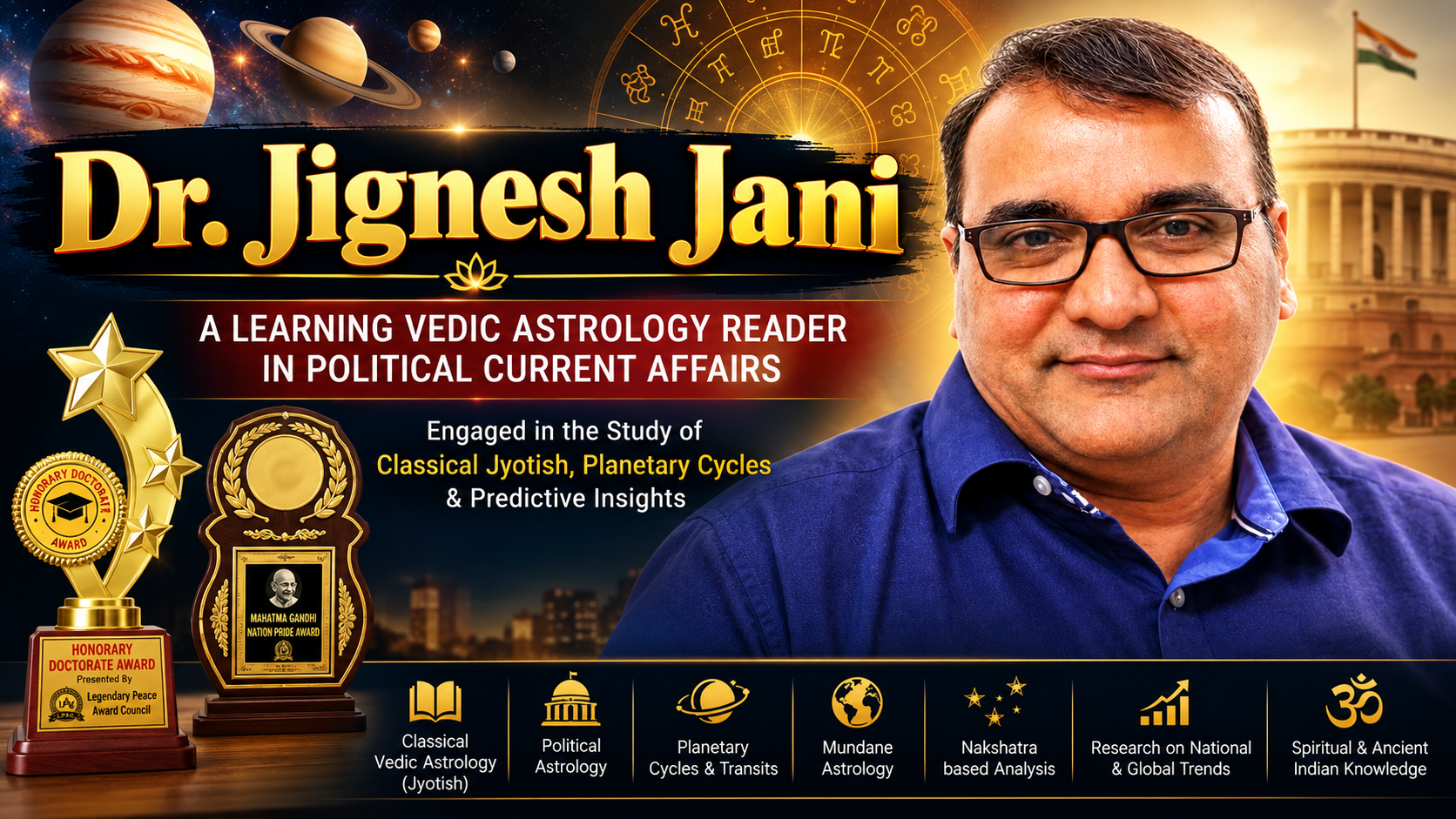

Ahmedabad | July 10, 2026: As international developments continue to shape political and economic discussions across the world, Vedic astrology researcher Jignesh Jani has shared his interpretation of current planetary alignments from the perspective of traditional Jyotish. According to Jani, many Vedic astrologers view the present celestial configurations as symbolically reflecting a period of global uncertainty and transformation rather than providing definitive predictions.
Jani explained that the ongoing Mars–Rahu conjunction, traditionally known as Angarak Yoga, has long been associated in Vedic astrology with heightened energy, strategic conflicts, decisive actions, and periods of increased geopolitical tension. He noted that these symbolic interpretations have historically been discussed by astrologers when analyzing collective events affecting nations and societies.
In addition, Jani pointed to the Saturn–Neptune alignment, which many astrological traditions interpret as representing institutional restructuring, ideological shifts, economic adjustments, and changing global power dynamics. According to him, these symbolic patterns encourage observers to reflect on how leadership, governance, and international cooperation influence world affairs.
Jani also highlighted Jupiter’s traditional role in Vedic astrology as a planet representing wisdom, ethics, justice, and diplomacy. He said many astrologers believe Jupiter symbolizes opportunities for peaceful dialogue, responsible leadership, and constructive negotiations during challenging periods.
While discussing these interpretations, Jani emphasized that astrology is not a scientifically established tool for forecasting specific geopolitical events, military actions, or diplomatic outcomes. Instead, he described it as a symbolic system that offers one cultural and philosophical perspective on collective human experiences.
“The decisions made by governments, international organizations, and world leaders will ultimately determine the future course of global events,” Jani said. “Astrology may encourage reflection on broader cycles, but peace, stability, and international cooperation depend on practical leadership and diplomatic engagement.”
Jani concluded by encouraging readers to approach astrological discussions responsibly, distinguishing traditional beliefs from evidence-based geopolitical analysis while supporting initiatives that promote dialogue, stability, and lasting international peace.