



#News #Latest #trending #india

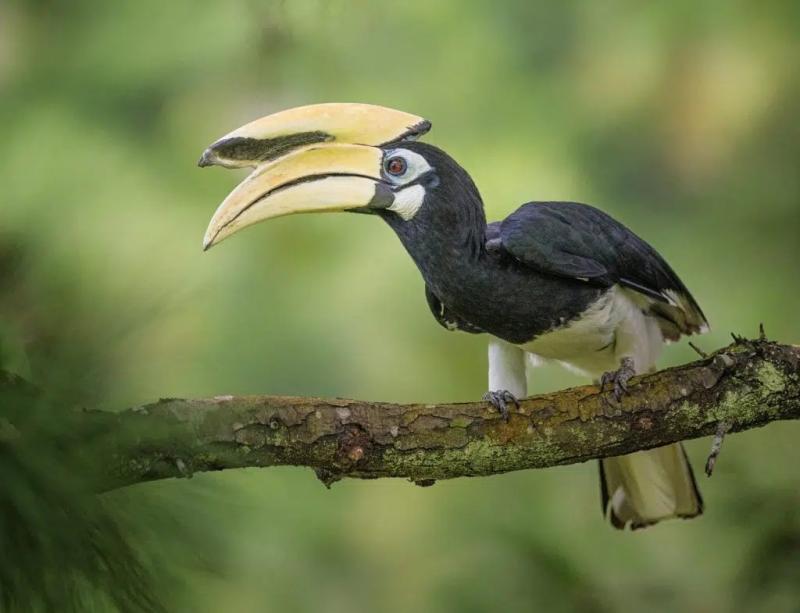
Raipur : Hornbills are one of the most fascinating and unique birds in the world. Their large size, large beak, attractive and colorful petals and generally boisterous behavior make them easily recognized everywhere. Their strange nesting habits are one of the many features that make hornbills so interesting. Special natural parks are being developed for the conservation of rare Malabar Pied Hornbill birds in Udanti-Sitanadi, Chhattisgarh, which will be developed as “Hornbill Restaurant”.
Considering hornbills as forest farmers, conservation efforts for the hornbill species are necessary to reduce their extinction risk through nest monitoring, artificial nesting, research, and local community involvement (nest adoption programs). Under the guidance of Forest and Climate Change Minister Shri Kedar Kashyap and the leadership of Principal Chief Conservator of Forests (Wildlife) Shri Arun Kumar Pandey, Udanti-Sitanadi Tiger Reserve is taking a new initiative in the field of biodiversity conservation.
This restaurant will not be any kind of artificial construction, but a natural group of fruit trees will be developed in the forest and surrounding areas. Under this, plants of Peepal, Banyan and Ficus species will be planted, whose fruits are the main food for hornbill birds. The objective of this initiative is to provide natural food to these birds throughout the year and promote their safe habitat. Efforts to plant and monitor trees needed for hornbills to nest.
It is noteworthy that these birds, which are generally found in the Western Ghats region, have now started appearing here in large numbers due to the favorable climate and greenery of Udanti-Sitan river. Whereas earlier their darshan was seen occasionally, now their presence is being recorded two to three times a week. Hornbill birds are also called “forest engineers” or natural gardeners of the forest, because after eating the fruits, they spread the seeds far and wide, which leads to the natural expansion of forests. The hilly area of Udanti-Sitanadi situated at an altitude of about 800 to 1000 meters above sea level is proving to be a suitable habitat for these birds.
Special tracking teams have been formed to protect and monitor these rare birds. Along with wildlife experts, local trained youth have also been involved, who are carrying out regular monitoring and protection of the nests. Besides, hunting activities and forest fires are also being monitored through drone technology. This initiative will promote eco-tourism along with environmental protection, which will enable tourists to see these rare birds from a safe distance in their natural environment and increase awareness about the biodiversity of the area.