


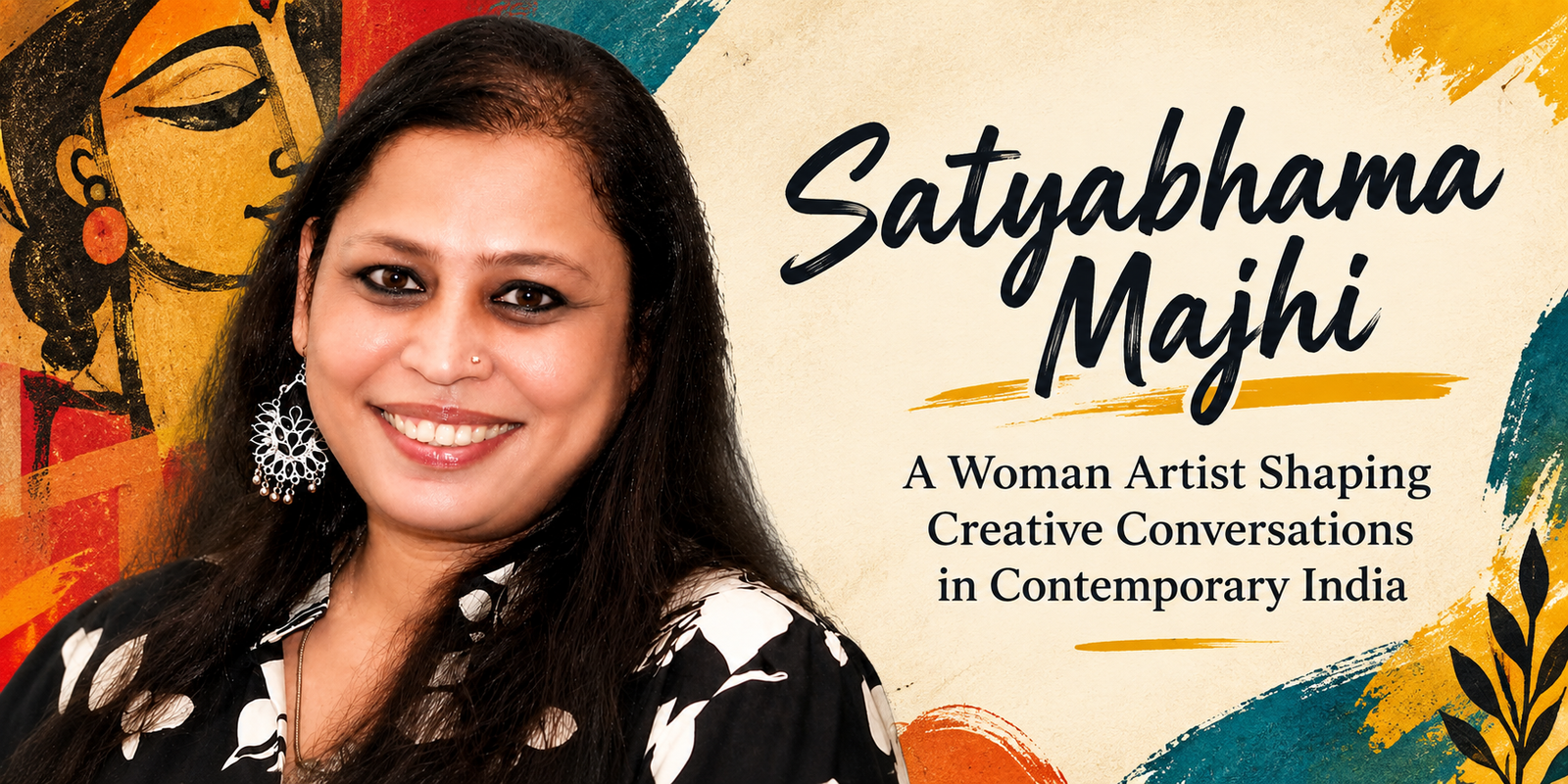

The relationship between human beings and the natural environment has become an increasingly important subject in contemporary art. Artists today often explore questions of climate, land, ecology, cultural memory and the ways communities depend upon their surroundings. In Odisha, contemporary artist Satyabhama Majhi has developed an artistic practice that engages with these questions through painting, public art, natural materials, community projects and long-term cultural observation.
Based in Bhubaneswar, Majhi works across painting, sculpture, installation, photography, mixed media and public art. Her practice connects contemporary artistic expression with traditional knowledge, indigenous culture and the changing relationship between people and their environments. Ecology in her work is therefore not simply a subject about nature. It is closely connected with culture, livelihood, memory and identity.
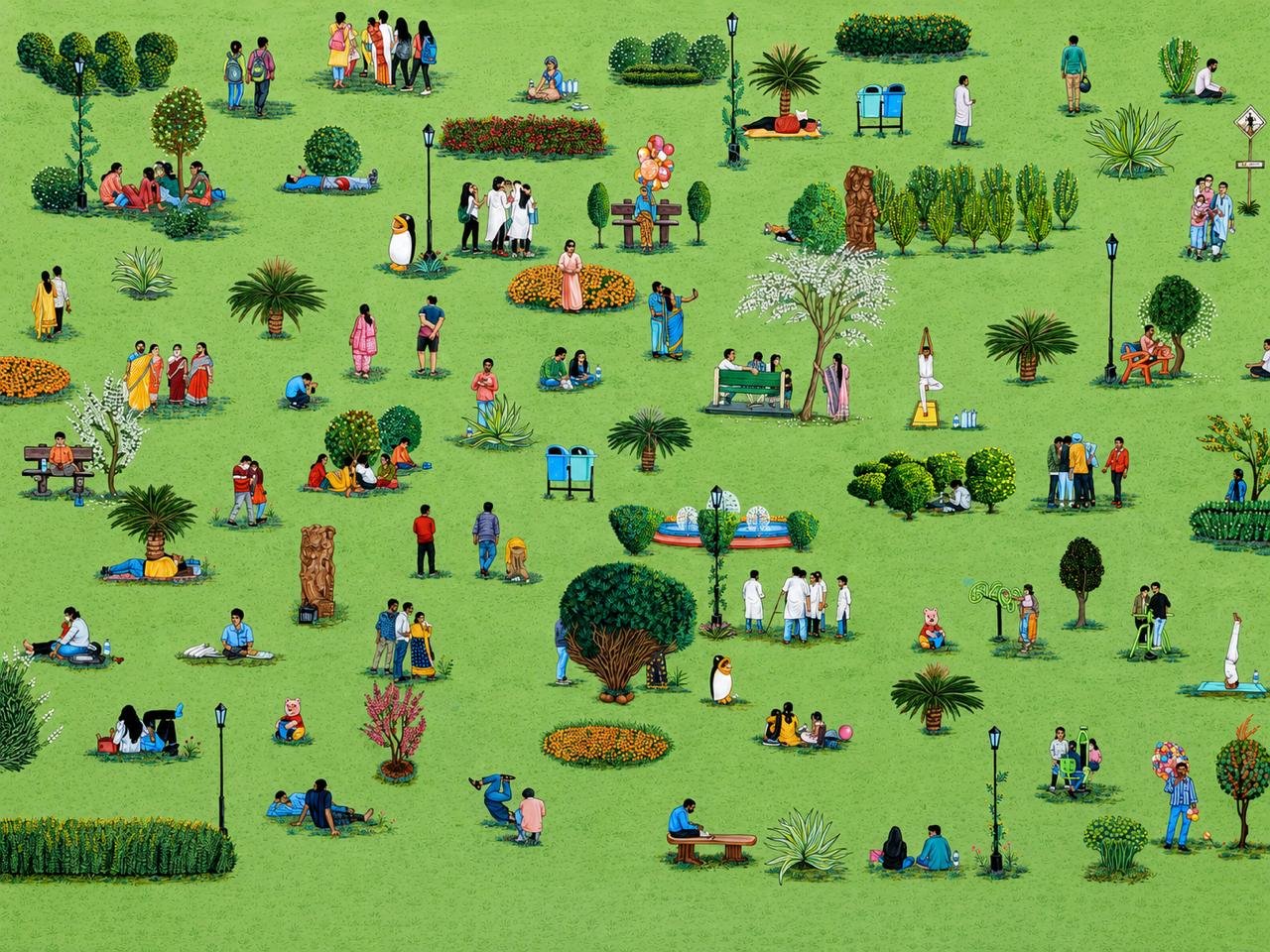
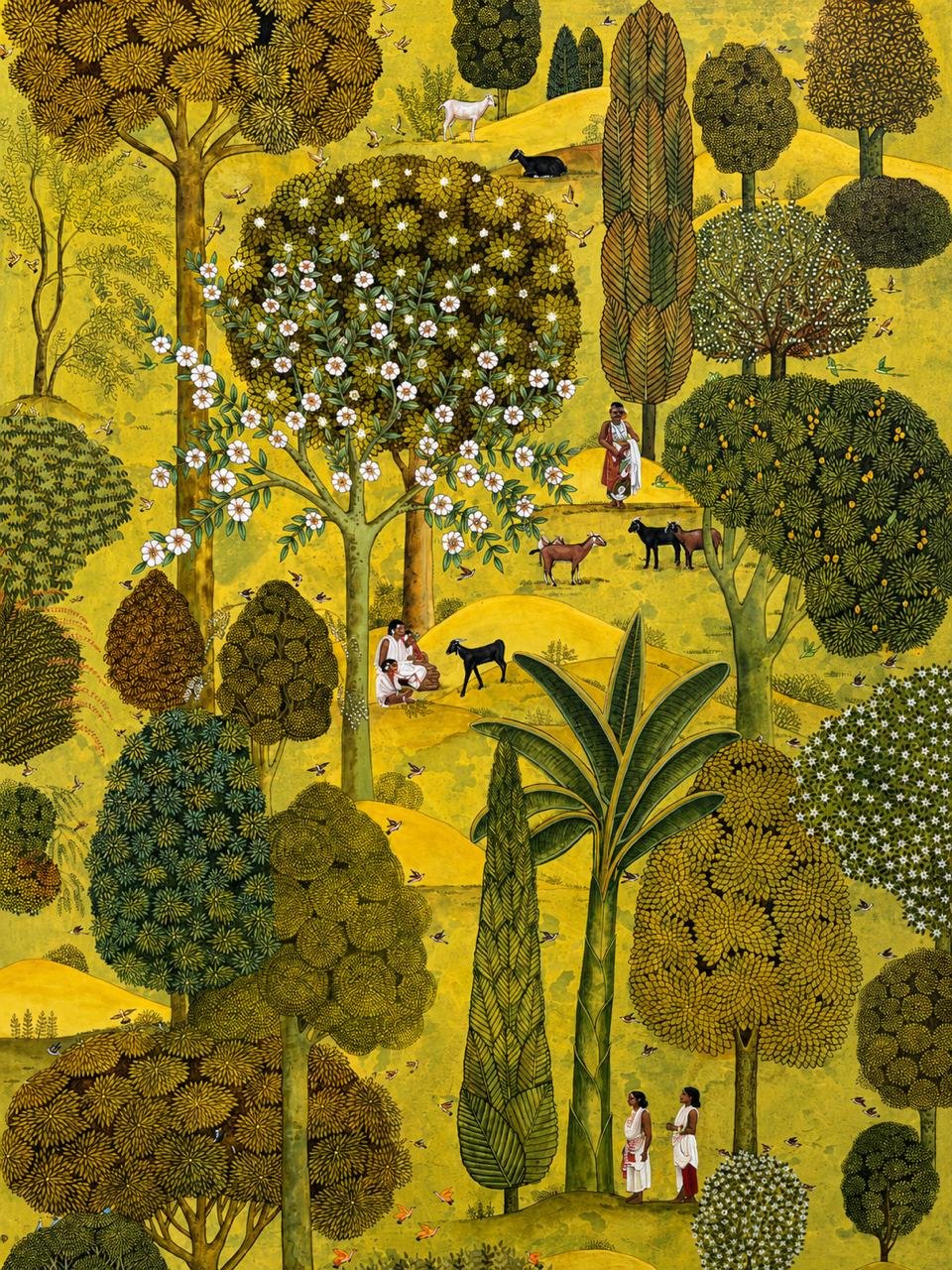
Nature as More Than a Background
In many artworks, landscapes can function simply as backgrounds for human activity. Majhi’s approach is different. Her engagement with ecological subjects considers the environment as an active part of human experience.
Her long-term engagement with the Niyamgiri region and the Dongaria Kondh community has contributed significantly to this perspective. Through observation and interaction, she has explored relationships between indigenous communities and their natural surroundings.
For communities whose cultural and economic lives are closely connected with forests, hills, agriculture and natural resources, the environment is inseparable from everyday life. Landscape can influence food, livelihood, rituals, movement, architecture, colour and cultural traditions.
These connections have become important elements within Majhi’s artistic thinking.
Niyamgiri and the Cultural Landscape
Niyamgiri holds a particularly important place in Majhi’s practice. Her engagement with the region has extended over more than a decade and has involved observing cultural practices, livelihood patterns, indigenous visual traditions and relationships with the natural environment.
The significance of Niyamgiri in her work goes beyond its physical appearance.
The hills and surrounding landscape can be understood as part of a larger cultural system. They are connected with memory, spirituality, community life and traditional knowledge.
This understanding influences the way Majhi translates her experiences into visual forms.
Her recurring triangle motif, for example, has been associated with the silhouette of the Niyamgiri hills and with ideas of landscape, stability, sacred geography and divinity.
Indigenous Knowledge and Ecology
One of the most important aspects of Majhi’s environmental approach is its connection with indigenous knowledge.
Traditional ecological knowledge is often embedded in everyday practices rather than written textbooks. Communities may understand seasonal changes, plants, agricultural cycles, natural materials and local landscapes through generations of experience.
Majhi’s engagement with the Dongaria Kondh community has encouraged her to look at these forms of knowledge as important cultural resources.
Her work does not treat indigenous communities simply as subjects for visual representation. Instead, sustained interaction and observation have helped inform her understanding of how culture and ecology are connected.
This approach allows environmental questions to become part of a broader discussion about cultural continuity.
Natural Pigments and the Material of Art
Majhi’s exploration of natural pigments provides another direct connection between art and the environment.
Materials including chalk stone, charcoal, turmeric, geru soil and brown stone have been explored as sources of pigment. These materials can be processed and combined with binders for artistic use.
The importance of such materials is both visual and conceptual.
When colour comes directly from naturally occurring substances, the material itself carries a relationship to the environment. The artist is not merely depicting nature; the physical artwork can contain materials connected to the natural world.
This creates a dialogue between subject and material.
The earth can become both the inspiration for the artwork and part of the artwork itself.
Ecology and Cultural Memory
Environmental change can also affect cultural memory.
When landscapes change, communities may experience changes in traditional practices, livelihoods and relationships with particular places. Consequently, ecological transformation can also become cultural transformation.
Majhi’s work engages with this intersection between environment and memory.
Her artistic concerns include changing environments, modernization, cultural identity and the relationship between people and places. These themes allow her to explore how contemporary development can coexist—or sometimes come into tension—with traditional ways of understanding land and nature.
Art can provide a space for reflecting on these changes without reducing them to simple arguments.
The Idea of “Up and Down”
The concept behind Majhi’s work “Up and Down” offers another example of how landscape can become a metaphor for human experience.
The work is inspired by life in Niyamgiri, where everyday movement through hilly terrain involves travelling uphill and downhill for different activities and aspects of livelihood.
This physical movement becomes a reflection on human life more broadly.
People constantly move in pursuit of changing circumstances, opportunities and responsibilities. The landscape therefore becomes more than a geographical setting—it becomes a way of thinking about movement, effort and change.
The work demonstrates how ecological observation can lead to wider philosophical questions.
Urban Life and Environmental Change
Although Niyamgiri represents an important ecological and cultural landscape in Majhi’s practice, her interests also extend to urban environments.
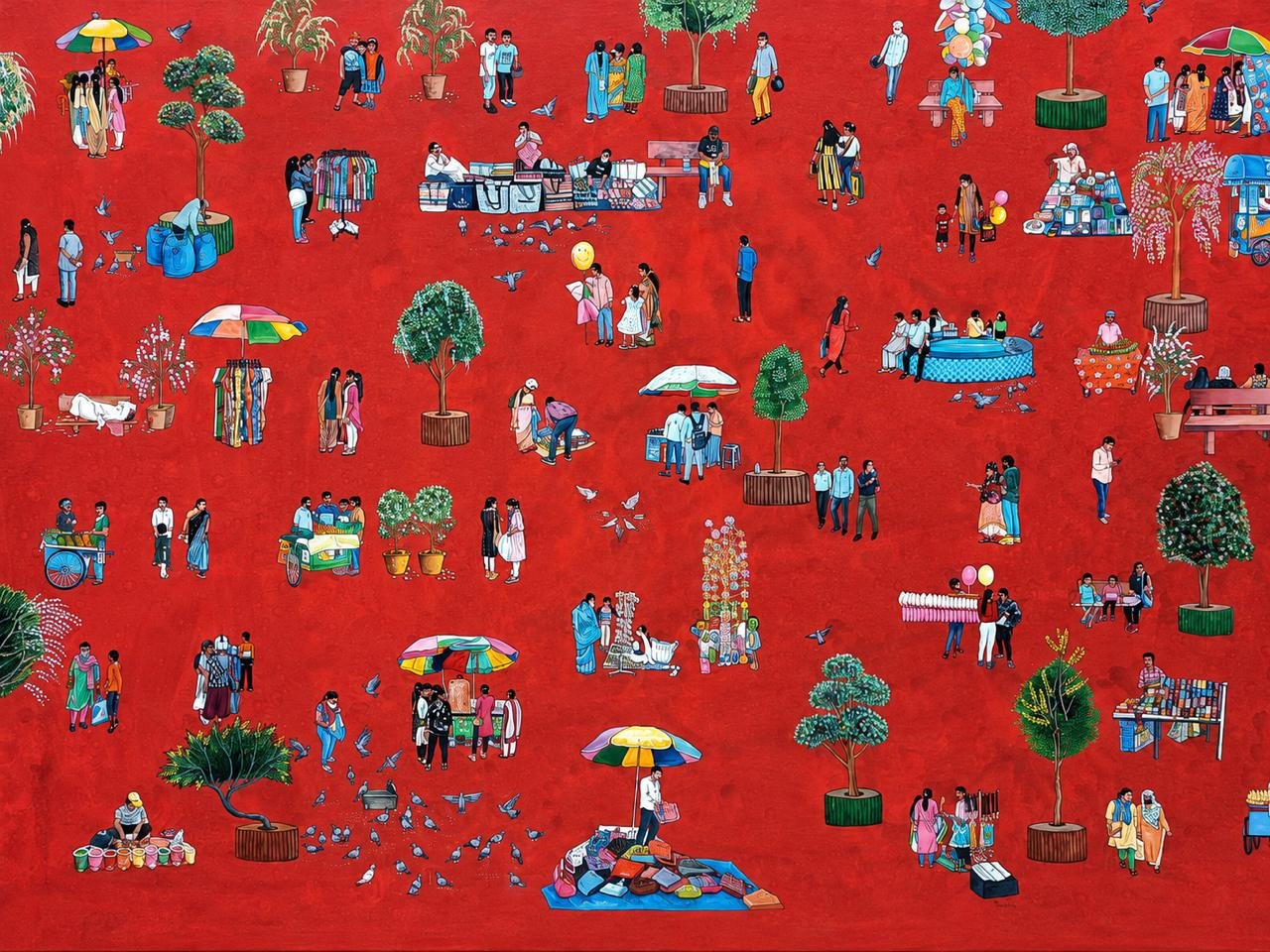
Based in Bhubaneswar, she has observed the transformation of urban life and changing relationships between people and their surroundings.
Cities are also ecosystems of human activity. Roads, buildings, public spaces, markets and neighbourhoods continuously reshape the relationship between people and the environment.
Majhi’s interest in urban life allows her to consider environmental change from another perspective.
The contrast between rapidly developing cities and culturally rooted landscapes creates a productive space for artistic reflection.
Public Art and Shared Environments
Public art further expands this ecological perspective.
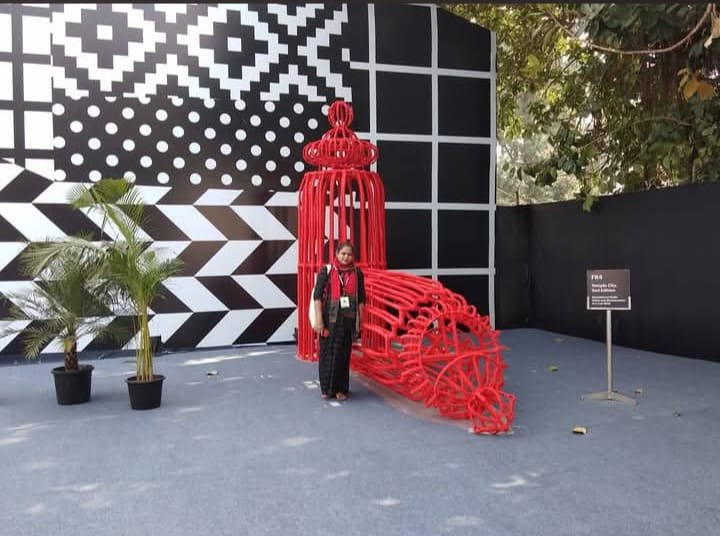
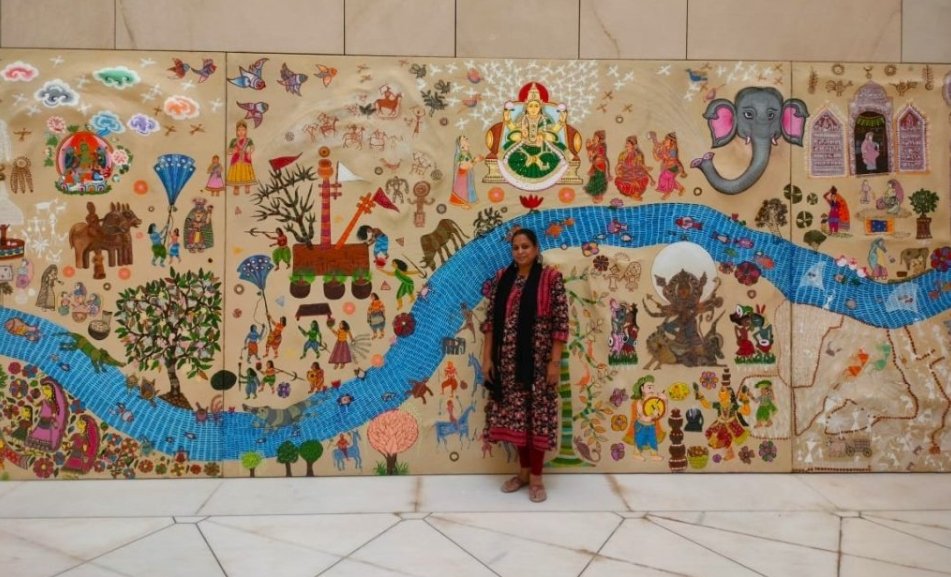
Majhi has participated in large-scale murals and public-art initiatives in Odisha. When artwork enters streets, neighbourhoods and shared public spaces, it becomes part of an existing environment.
This creates a different relationship between artwork and nature.
A gallery provides a controlled environment, whereas public art exists within changing conditions—weather, architecture, traffic, people and everyday activity. The artwork becomes part of the life of a place.
For an artist interested in relationships between people and environments, this makes public art particularly meaningful.
Community as Part of the Environment
Majhi’s ecological concerns are closely connected with her understanding of community.
People do not exist separately from their environments. Communities develop traditions, livelihoods and identities in response to the places where they live.
Her work with rural and tribal communities, schools and urban groups reflects this understanding.
Community-based art allows environmental questions to be discussed through human experience. Instead of presenting ecology as an abstract subject, it can be connected with food, work, movement, memory, culture and everyday life.
This approach gives environmental art a more human dimension.
Art as Observation
Observation is central to Majhi’s artistic process.
Her community engagement demonstrates the importance of spending time with people and places before turning experiences into artistic forms. This can be particularly important when working with ecological and indigenous subjects.
Careful observation allows an artist to understand relationships that may not be immediately visible.
A mountain can be a landscape, but it can also be a sacred space. A natural pigment can be a colour source, but it can also represent a connection with local materials. A daily journey can be physical movement, but it can also become a metaphor for human aspirations.
These multiple meanings emerge through sustained engagement.
Connecting Environmental and Cultural Questions
Majhi’s ecological perspective ultimately connects several major concerns within her practice: nature, culture, indigenous knowledge, memory, community and contemporary change.
Her work suggests that environmental questions cannot always be separated from social and cultural questions.
When landscapes change, communities can change. When traditional knowledge disappears, relationships with nature can also be affected. When cities expand, people’s experience of public space and everyday life can transform.
Contemporary art can provide a space in which these interconnected developments are observed and interpreted.
Conclusion
Satyabhama Majhi’s engagement with ecology demonstrates a contemporary artistic approach in which nature is understood through relationships rather than as an isolated subject.
Her long-term engagement with Niyamgiri and the Dongaria Kondh community, exploration of natural pigments, interest in landscape-based symbolism and observation of urban transformation all contribute to an artistic practice concerned with the connections between people and their environments.
Her work shows that ecological art can also be about cultural memory, indigenous knowledge, livelihood, identity and social change.
By bringing these ideas into painting, public art, multidisciplinary projects and community-based practice, Majhi creates a visual language in which the natural and human worlds remain closely connected.
In this sense, her artistic journey reflects an important idea in contemporary Indian art: understanding the environment also means understanding the communities, histories and cultural memories that have developed within it.