



#News #Latest #trending #india

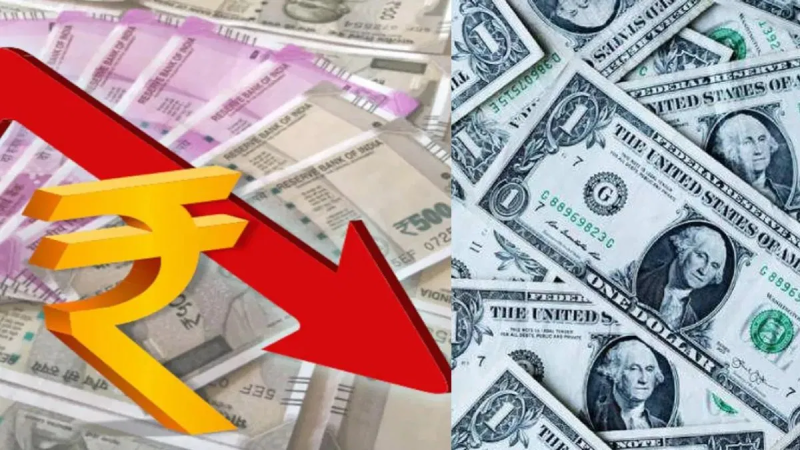
The period of fluctuations in the Indian Rupee continues and even after the recent recovery, its weakness does not seem to have stopped completely. After reaching near record levels against the US dollar, the rupee had shown some strength, but with the beginning of the last trading day of the week, it again declined.
The rupee fell 23 paise to 89.94 per dollar amid selling by foreign investors, slight improvement in crude oil prices and global uncertainties. According to traders, negative trend in domestic stock markets, increasing demand for dollars from importers and uncertainty regarding trade agreements have weakened investor sentiment, which has had a direct impact on the rupee.
Then why did the rupee weaken?
In the interbank foreign exchange market, the rupee opened at 89.84 against the dollar and came under pressure in early trade and slipped to 89.94, which shows a decline of 23 paise compared to the previous closing price. Earlier on Wednesday, the rupee had weakened by eight paise and closed at 89.71 against the US dollar, while the markets remained closed on Thursday due to Christmas. During this period, limited weakness was seen in the dollar globally and the dollar index, which shows the strength of the dollar against six major currencies, fell by 0.08 percent to 97.89.
At the same time, in the international market, Brent crude futures rose by 0.16 percent to reach $ 62.34 per barrel. Stock market data shows that foreign institutional investors sold shares worth Rs 1,721.26 crore on Wednesday, creating additional pressure on the market.
What do experts say?
Experts believe that the main reason for pressure on the rupee is the global risk aversion trend and continuous capital withdrawal by foreign investors. According to Dilip Parmar, senior research analyst at HDFC Securities, selling by foreign investors ahead of holidays and increased demand for dollars from bullion importers have further strengthened the rupee’s weakness.
He also said that despite the Reserve Bank of India’s announcement of dollar-rupee swap and purchase of government securities under open market operations (OMO), the market did not show much enthusiasm as these steps could not effectively reduce the widening gap between supply and demand of dollars before the end of the year.