



#News #Latest #trending #india

The tradition of installing horseshoes in the house is linked to folk beliefs, Vaastu interpretations and foreign folklore. It is considered a symbol of protection from negative energy, evil eye and Vaastu defects. There is no direct mention of it in religious texts, but due to faith and belief people associate it with good fortune and peace. Belief in horseshoes has its roots in ancient Greece and Christianity. It is believed that iron can ward off evil and the crescent-shaped shape of the horseshoe is a symbol of fertility and good fortune. The history of iron horseshoes is found in India as well as in most of the western countries.
In India, many traditions related to home have been going on for centuries. Some of these traditions are based on religious texts, while some are born from folk beliefs and faith of the people. Putting horseshoe in the house is also one such tradition, which people consider a symbol of auspiciousness, good fortune and protection from negative powers. Today in villages, towns and even cities, horseshoes can be seen on the doors of many houses and shops.
Horseshoes are made of iron and in Indian beliefs, iron is considered an element that keeps away negative energy. The horse itself is a symbol of strength, speed, hard work and victory, so its cord was also associated with hard work and success. It is believed that the cord that has been used on the legs of a horse has special energy.
In India, this belief mainly comes from rural folk traditions. People in villages believed that iron objects protect from evil eye, upper obstacles and negative powers. For this reason, things made of iron were installed outside the house, in which horseshoes became prominent. There is no direct mention of horseshoe in the original texts of Vastu Shastra, but iron is used to protect the entrance and prevent negative energy. These are mentioned in the explanations of Vaastu. On this basis, horseshoe was accepted as a Vastu remedy.
It is a foreign (European) folk tale. A famous belief related to horseshoe also comes from European folklore. According to the legend, Saint Dunstan had nailed a horseshoe to the devil’s feet to teach him a lesson. Tormented by the pain, the devil promised that he would never enter a house where a horseshoe was attached to the door. From here the belief spread that horseshoes protect from evil powers. In some tantric and folk beliefs, iron is also
It is considered to protect from evil eyes, upper obstacles and negative powers. Horseshoe became a part of these beliefs.
It is believed that the horseshoe placed on the main door prevents negative forces from entering the house. Horseshoe is considered a symbol of good luck. It is said that this brings wealth, progress and prosperity to the house. Homes where problems, stress or financial problems persist again and again. Putting horseshoe there is considered a Vastu solution. Even today in rural areas it is considered a symbol of protection from the evil eye.
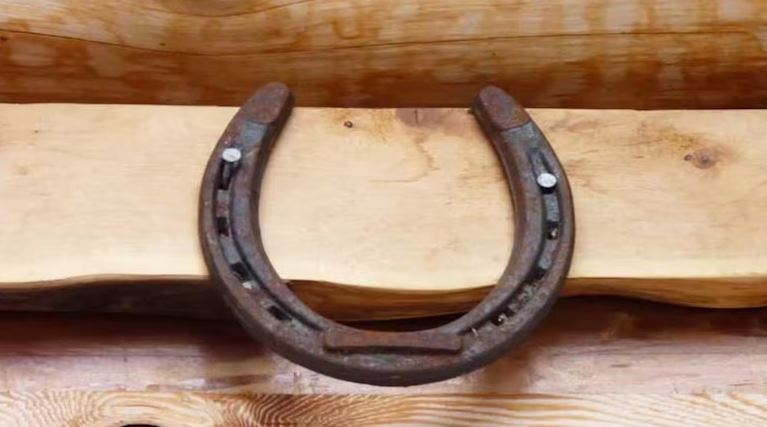
The correct way to put a horseshoe is, U shape open upwards – this is a symbol of good luck and accumulation of wealth. Open downwards- symbolizes the negative energy falling out. Its methods may be different in different areas.
Horseshoe is placed on the main entrance of the house, at the entrance of the shop or office and on the outer wall of the house. It is believed that the old cord used by the horse is more effective, but nowadays people also wear new cord as a matter of faith and decoration.
There is no scientific evidence that horseshoes bring good luck. But, psychologically, it gives positive thinking and confidence to the person, which helps in taking better decisions in life.