




The war between Russia and Ukraine continues to drag on. Along with the military front, this conflict has now also become a fight for economic, diplomatic and global recognition. After the start of the war, America and Europe made several strategic efforts to isolate Russia from the international system. Various efforts were made, including stringent economic sanctions, boycott from the global financial system and limiting Putin’s international presence.
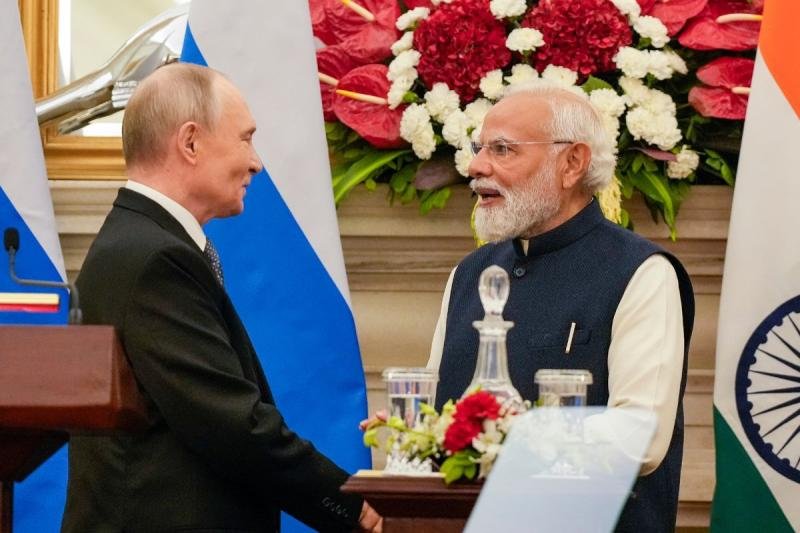
In such an environment, President Vladimir Putin’s two-day visit to India proved to be a major diplomatic victory for Russia. This visit was not just a bilateral event, but also became an opportunity for Russia to return to the international stage.
Russia’s economic challenges, India’s role
To shock Russia, Western countries almost cut it off from the global financial system. Cards of foreign banks are discontinued in Russia and cards of Russian banks do not work abroad. This had a major impact on Russia’s economy and business. To find a solution to this situation, Russia promoted transactions in the national currency.
This is the reason why this time the heads of many Russian banks also came to India along with Putin. Both countries laid special emphasis on streamlining financial transactions, working on alternative payment systems and strengthening economic cooperation by 2030. This step is extremely important for Russia, because India is a stable, large and reliable market for it.
New energy to Putin’s international image
After the Ukraine war, the Western world tried to keep Putin away from international forums. He could not attend big summits like G20. Despite being a permanent member of the United Nations Security Council, he could not address the United Nations General Assembly in the last 3 years. Even though he went to China for the SCO conference, he did not get the global acceptance that Russia needed.
His visit to India gives a completely different message. Prime Minister Narendra Modi breaking the protocol and going to the airport, giving a private dinner and then giving a grand welcome at Rashtrapati Bhavan, all these incidents show that Putin is still a special partner of the world’s largest democratic economy.
By coming to India, Putin sent a clear signal to the West that Russia cannot be excluded from global politics. India also very easily conveyed the message that Russia is still essential for international balance.
Visiting Gandhi’s tomb is not a formality
President Putin’s visit to Rajghat to pay tribute to Mahatma Gandhi was a very important step. The Western world accepts Gandhi as the greatest symbol of peace and moral leadership. When Putin appeals to the world for peace amid the Ukraine war, and this appeal comes from Gandhi’s memorial, it has a different impact at the international level. This sends a message that Russia is not just the face of war, it is also talking about dialogue, stability and balance.
India-Russia Economic Vision: Partnership for the Future
India and Russia have prepared a comprehensive economic roadmap till 2030, with emphasis on increasing cooperation on energy, trade, banking, space, defense and maritime corridors. While Europe is making military preparations against Russia through Re-Arming Europe 2030, Russia has tried to create a strategic-economic balance by increasing cooperation with India. This step will increase Russia’s ability to deal with Western pressures in the next decade.
Big message in 2 days: Russia still a global power
In just two days, Putin gave three big signals to international politics. First, Russia is not isolated. By coming to a big country like India, he changed this picture. Second, the economic partnership between the two is strong and the 2030 framework is like a security shield for Russia. Apart from this, thirdly, Russia has tried to improve its diplomatic image with the narrative of peace – Gandhi’s message.
This visit has brought psychological and strategic relief to the political leadership of Russia. With this, Putin will not only return to the international stage with more confidence, but will also appear more capable of facing pressures from the West in the coming years.