



#News #Latest #trending #india

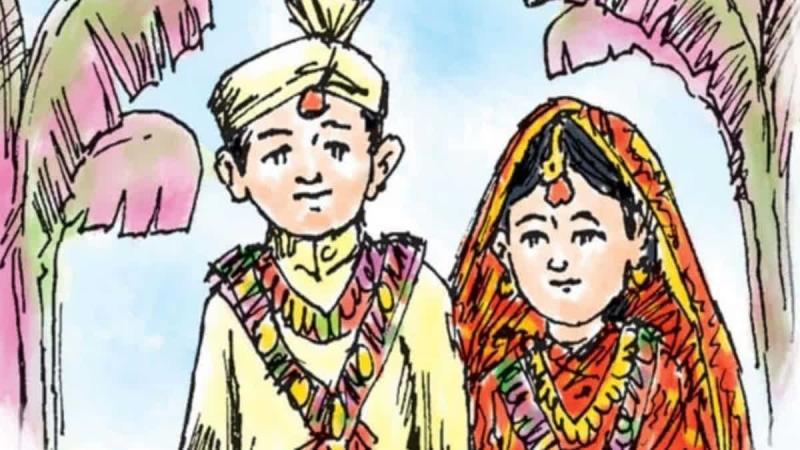
New Delhi: ‘Child Vivah Mukti Rath’ is promoting the Central Government’s 100-day campaign to stop child marriage across the country, which is now in its last phase. The Union Ministry of Women and Child Development’s 100-day campaign to end child marriage is currently in its third and final phase, which is being implemented in different states and union territories (UTs). This last phase of the campaign will end on March 8.
‘Child Vivah Mukti Rath’, an initiative of India’s largest child rights advocacy network, is spreading the message of ‘Child Marriage Free India’ to the most remote areas, ensuring that even the most vulnerable children are reached and protected.
This medium of change is currently roaming in 439 districts of 25 states and union territories. According to the network, this initiative is being taken to support the Union Ministry of Women and Child Development’s 100-day intensive nationwide campaign to end child marriage. In India, despite being legally prohibited, child marriage remains a major social issue, affecting millions of young boys and girls across the country.
The practice poses significant health risks to young girls, particularly through early pregnancy, increases their risk of domestic violence, and perpetuates poverty and gender inequality.
In India, despite progress, 23 percent of women aged 20-24 were married before reaching the age of 18 (National Family Health Survey-5, 2019-21), according to the Ministry of Women and Child Development.
The ministry is focusing on 257 high-burden districts identified through the National Family Health Survey-5 data (districts where child marriage rates are equal to or higher than the national average). Its goal is to eliminate child marriage by 2030.
What are the special features of ‘Child Vivah Mukti Rath’?
The ‘Child Vivah Mukti Rath’ has effective slogans, which are displayed in the form of posters, as well as a pledge-signature board. Its design aims to reach the most isolated and backward communities along its path.
Rights of the Child, a network of over 250 organizations working to protect children across India, said that where there are main roads and good accessibility, four-wheel-drive vehicles are easily accessible, while the most remote villages, where connectivity is poor, are reached by motorcycle or bicycle caravans across the state.
Throughout this journey, panchayats, district administrations, child marriage prevention officers (CMPOs), and other government officials have been actively engaged in engaging with communities for awareness and pledge-taking efforts.
The yatra, which will conclude on International Women’s Day, will pass through schools, gram sabhas, religious institutions and historical places, and convey its message through street plays, cultural programs and stories of survivors.
It is noteworthy that Chhattisgarh Chief Minister Vishnu Dev Sai recently inaugurated ‘Child Vivah Mukti Rath’ from his hometown Jashpur. The chariot, which has a pledge wall and awareness messages against child marriage, will travel through villages and towns across the state till March 8. Similarly, Uttarakhand Chief Minister Pushkar Singh Dhami also launched a similar chariot in his state.
Speaking to ETV Bharat in this regard, Bidhan Chandra Singh, national convenor of Child Marriage Free India, which is part of the global initiative to end child marriage, said on Wednesday, “This 100-day campaign aimed at ending child marriage is an example of a unique ‘whole of government and whole of society’ strategy of the global initiative.”
“The ‘Child Marriage Mukti Rath’ acts as a catalyst for change, spreading the message of ‘Child Marriage Free India’ to the most remote areas, ensuring that even the most vulnerable children in isolated villages are reached and kept safe.”
He said, “Today, with the efforts of justifiable rights for children, strong initiative and dedication of the government as well as swift action of law enforcement agencies, we can say with pride and confidence that child marriage is reducing rapidly in India.”