



#News #Latest #trending #india

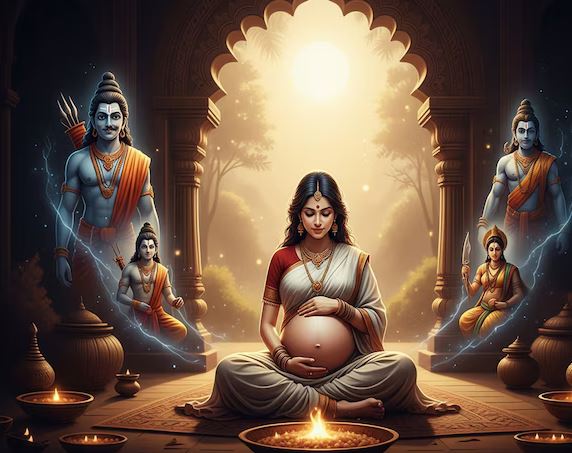
I had once heard in the stories of grandmothers that what a mother thinks and hears affects the child. Now the same thing is in the headlines once again. Madhya Pradesh Chief Minister Mohan Yadav has announced to teach ‘Garbh Sanskar’ in universities and create ‘Garbh Sanskar Rooms’ in government hospitals. With this, the stories of Abhimanyu and Mahagyani Ashtavakra of Mahabharata have again come into discussion. The question is not just one of faith but also one of curiosity – can a child in the womb really learn? In the Sanatan tradition, this is considered the first sanskar, the purpose of which is said to be to provide a calm, positive environment to the mother and to wish for the good qualities of the coming child. The mythological stories behind these claims are both interesting and force to think.
What is the idea of Garbh Sanskar?
If understood in simple language, Garbha Sanskar is based on the idea that the pregnant woman’s eating habits, behaviour, environment, music, things read and heard – all affect the child. Even today in villages, you will find elders saying, “Don’t get angry in the womb, the child will be irritable” or “Listen to good things, the child will become intelligent.” This popular belief is reflected in the religious scriptures in the form of rituals.
Tradition vs modern perspective
Modern science considers the impact of the mother’s stress, nutrition and emotional state on the child. Although the mythology of ‘hearing knowledge in the womb’ is not a matter of science but of faith, these stories have shaped people’s thinking for centuries.
Abhimanyu: Incompletely learned knowledge
This incident from Mahabharata is most narrated. Arjun was explaining the strategy to break the Chakravyuh to his pregnant wife Subhadra. It is said that Abhimanyu, who was growing in the womb, was listening to all this. He heard the method of entering the Chakravyuh, but could not fully hear the method of exiting – because Subhadra had fallen asleep.
effect seen in war
The same thing seemed to be true in the war of Kurukshetra. Abhimanyu breaks the Chakravyuh, but gets surrounded due to lack of complete information on how to get out. This story is often told as an example that learning is possible even in the womb, but incomplete knowledge can be dangerous.
Ashtavakra: Scholar from the womb?
The second story is of Ashtavakra, who is known for his knowledge. It is believed that his father used to teach Kahod Veda and mother Sujata used to listen to it during her pregnancy. Ashtavakra acquired the knowledge of Vedas in the womb itself.
I interrupted my father
The story goes that one day he pointed out a mistake in his father’s pronunciation right from the womb. The father became angry and cursed that the child would be born crooked in eight places. For this reason his name was Ashtavakra. The body was crooked, but the mind was sharp. Later he defeated scholars in debates and gave knowledge like ‘Ashtavakra Geeta’.
Why are these stories in discussion again?
After the Chief Minister’s announcement, these stories are circulating not only on religious forums but also on social media and college debates. Some people are linking it with culture, while some are raising questions as to how it will be made a part of studies.
public interest
Interestingly, things like music therapy, yoga, meditation are already popular during pregnancy in cities. Many parents believe that a positive environment makes a difference. In such a situation, the discussion of Garbh Sanskar does not seem new to people, just the language and context are different.
story, faith and thinking
Whether we consider these stories as historical events or symbolic stories, one thing is clear – they give the message to the society that the creation of a child was considered to have started even before birth. Mother’s mental balance, calm environment, good thoughts – all these were considered important. Today, when this issue has reached the policy level, there is bound to be a debate. But the stories of Abhimanyu and Ashtavakra are once again forcing people to think about how to understand the things said in tradition from a modern perspective.