



#News #Latest #trending #india

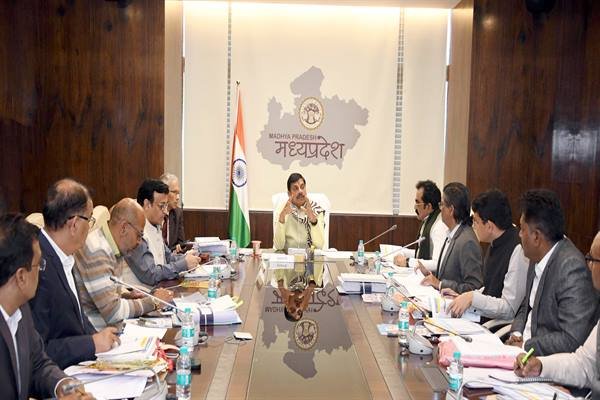
Bhopal : Chief Minister Dr. Mohan Yadav has said that roads are not just a medium of transportation but are the basis of development, employment, access to health services and socio-cultural progress. The objective of the department is to look at every construction work not just as a technical project but as a means of improving the living standards of the people. Chief Minister Dr. Yadav said that completing each project in a timely manner with quality, transparency and innovation is the top priority of the government, these efforts realize the spirit of “Public Works for Public Welfare”. These instructions were given by Chief Minister Dr. Mohan Yadav during the review meeting of the Public Works Department in the Ministry.
Appreciating the efforts being made by the department to bring the spirit of “Public Works to Public Welfare” on the ground, Chief Minister Dr. Yadav said that the development of infrastructure of the state is the basis of public welfare and the department is doing remarkable work in this direction. He said that every road, every bridge, every project is an important part of our concept of making the lives of the people simple and safe.
Chief Minister Dr. Yadav directed to increase the density of highways in the metropolitan area and neighboring areas. Work on overall development by including the entire state. He said that soon Jabalpur and Gwalior will also be declared metropolitan areas. The proposal should be conceptualized on the basis that urban, rural and industrial areas all get the benefits of infrastructure development. He said that proposals should be prepared on the basis of vision document to bring the density of highways closer to the national level. Local demands and suggestions should be given due place in the proposal. Chief Minister Dr. Yadav said that the Additional Chief Secretary should determine the action plan according to the overall development of the areas.
Chief Minister Dr. Yadav directed that the Public Works Department should also be included in the formulation of an integrated policy of urban development. He said that special attention should be paid to environmental coordination in infrastructure development. For sustainable development, buildings should be constructed on green building concept on the lines of Diamond Park in Surat. Saving of electricity and water should be ensured. Chief Minister Dr. Yadav said that Vaastu-science should be kept in mind while constructing buildings. So that proper use of sunlight, air and other natural resources is ensured and energy can be saved.
Chief Minister Dr. Yadav said that expressway is the demand of modern times. The facilities of rural areas should be kept in mind in the development of these infrastructures. Include fly-overs, under-passes, service lanes in the proposal as required. It was told in the meeting that the works of Simhastha-2028 are being done on priority. Administrative approval for the proposed works has been issued. The work will start by the end of December. Chief Minister Dr. Yadav directed that the works should be completed by June 2027.
It was informed in the meeting that out of 12 thousand 212 complaints received in Lokpath App, 12 thousand 166 have been resolved. Chief Minister Dr. Yadav appreciated the excellent use of Lokpath App. He said that real-time road conditions should also be updated in the Lokpath app. Also, its publicity should be ensured so that more and more people can benefit from it. Public Works Minister Rakesh Singh said that further distance between places, all alternative routes, tourist places, medical services, black spots, toll charges and other facilities will also be mapped in the Lokpath app. It will be useful for local citizens as well as visitors. Chief Minister Dr. Yadav directed that continuous maintenance should be ensured on national and state highways. It should also be ensured that lighting, greenery and caution markers are as per standard.
A meeting of the Board of Directors of Madhya Pradesh Road Development Corporation (MPRDC) and Madhya Pradesh Building Development Corporation (BDC) was held under the chairmanship of Chief Minister Dr. Mohan Yadav. MD MPRDC Bharat Yadav presented information about the ongoing works and future plans of MPRDC. Similarly, MD BDC Sivi Chakraborty gave details of the works of Building Development Corporation and the upcoming action plan.
In the meeting, Principal Secretary PWD Sukhveer Singh said that the innovations being made by the department, road planning using PM Gatishakti portal, determination of time limit through BISAG-N and project monitoring are being done. Along with this, works like coordination with environment, tree plantation, tree-shifting, public pond, solar energy have also been included in the development works. He said that the department has been appreciated at the national level for its excellent use of PM Gati Shakti. Public Works Minister Rakesh Singh, Chief Secretary Anurag Jain, ACS Neeraj Mandloi, ACS Manish Rastogi, Principal Secretary Public Works Sukhvir Singh, MD MPRDC Bharat Yadav, MD BDC MCB Chakraborty and officials of the department were present.
Achievements of two years
In two years, Madhya Pradesh has set an unprecedented record by constructing, upgrading and strengthening 12 thousand km of roads, due to which the state’s road network of 77 thousand 268 km has been included among the leading states of the country.
By achieving 99% of the financial target in the financial year 2024–25, the department set an excellent example of timely implementation and effective management of resources.
Redressed 12,166 complaints out of 12,212 complaints through “Lok Path” mobile app, achieving 99.6% resolution rate, thereby strengthening the transparency and public participation of the department.
The works of major urban corridors like the state’s longest 6.9 km Damoh Naka-Madan Mahal-Medical Road elevated corridor in Jabalpur, Dr. Ambedkar Flyover (2.73 km) and 15.1 km long Shyama Prasad Mukherjee Nagar Marg in the capital Bhopal were completed.
Health infrastructure was strengthened by completing the construction of 3 new medical colleges in the state.
Construction of 136 school buildings was completed, providing excellent infrastructure for quality education.
Construction of two new District and Sessions Court buildings in Gwalior and Rewa was completed.
With central assistance, 378 works out of 421 sanctioned roads were completed and construction of 18 bridges was in progress, thereby strengthening the connectivity of rural and urban areas.
506 “Lok Kalyan Sarovars” were constructed in the entire state, which established an innovative model of water conservation along with road construction.
To ensure quality construction, surprise inspection system was implemented in which 52 contractors were issued notices and 15 were blacklisted, indicating a zero tolerance policy towards quality.
innovation
The Department made the road planning process completely scientific, based on multi-level data analysis and transparent by adopting PM Gatishakti based GIS Master Plan.
All projects—survey, sanction, DPR, construction progress and payment—were integrated on a digital platform by developing a Public Project Management System (LPMS).
By completing geo-mapping of all roads, bridges and buildings through the Public Works Survey App, 100% digital asset inventory became available to the department.
Aerial distance based road planning technology was implemented for the first time, making selection of expressways and connectivity corridors more accurate and economical.
Sustainable, fast and low cost solutions were implemented in road construction by adopting modern repair techniques like FDR, Jet Patcher, Infrared Repair.
The quality of the material was ensured by setting up a GPS-locked bitumen tanker system and centralized quality laboratories.
By adopting solar energy in departmental buildings, 269 kW capacity plants were installed in 10 buildings and the process of installation of 6.5 MW capacity in 689 buildings was started.
For roadside plantation, 2.57 lakh saplings were planted in July-August 2025, which increased green cover and reduced carbon footprint.
Adopting tree transplantation technique, 1271 trees were successfully relocated with 85% survival rate indicating the environmental sensitivity of the department.
Software based surprise inspection system brought transparency in construction monitoring and established real-time certification model.
Action plan for the next three years
For the first time in the state, major high-speed corridors like Ujjain-Indore, Indore-Ujjain and Bhopal Eastern Bypass will be developed under the state-funded expressway model.
Religious tourism, places of faith and urban connectivity will be strengthened by spending Rs 12 thousand crore on 52 major works for Ujjain-Simhastha 2028.
By developing an extensive network of 6-lane and 4-lane greenfield corridors in the state, industrial areas, agricultural markets, logistics zones and major cities will be connected at a fast pace.
With the help of NHAI, highways of national importance like Satna-Chitrakoot, Rewa-Sidhi, Betul-Khandwa-Indore, Jabalpur-Jhalmalwad will be expanded.
Scientific use of soil generated from road construction and water conservation will be implemented as an integrated model by constructing 600 new “Lok Kalyan Sarovar” in the next three years.
A target has been set to adopt 100% solar energy in departmental buildings, which will lead to huge reduction in energy costs and promote green building concept.
Roadside amenities, blackspot improvements and emergency response systems focused on road safety will be further strengthened.
By fully implementing GIS based Road Master Plan, future road projects will be selected on the basis of scientific analysis, travel distance, industrial requirements and traffic density.
The quality control system of construction works will be further tightened, which will include mobile labs, rapid testing, AI based reporting and digital monitoring.
The aim is to reduce the traffic pressure of cities and reduce commuting time by developing new ROBs, flyovers, bypasses and smart corridors in urban areas.
Over the next three years the entire departmental asset inventory will be converted into a 100% digital, geo-referenced and auto-updating system, making planning, budgeting and field monitoring more effective.