


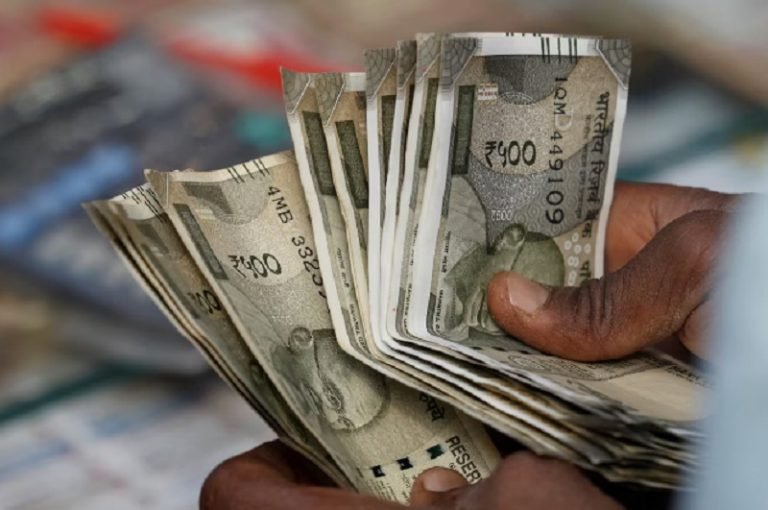


New Delhi. For the last few days, the Indian Rupee has been falling against the American Dollar and has broken the psychological level of Rs 90 per dollar. Experts say that this weakness of the rupee will have a mixed effect. Some sectors, especially labour-intensive export sectors, can get a big benefit from this. At the same time, pressure will also increase on many fronts. Prices of many goods and services, including petrol and diesel, may increase in the coming days.
Real blow from US tariffs
According to the SBI report, the huge tariffs imposed by America on India are the biggest reason for the weakness of the rupee. The US imposed tariffs of up to 50% on India’s main exports in August. This tariff on countries like China, Vietnam and Indonesia is only 15-30%.
The effect of this was that India’s trade deficit increased to a record high of $ 41.68 billion in October this year. Whereas during April to October of the current financial year, the trade deficit had reached 78.14 billion dollars. That means a rise in losses was seen during October. However, the main reason for this surge is the sharp increase in gold imports.
Steps taken by government and RBI
The government and RBI have taken several steps at their level to overcome the trade deficit caused by US tariffs. The government has intensified negotiations on trade agreements with several countries to increase exports and provide relief to affected sectors. At the same time, RBI has pulled out to maintain the rupee at a ‘certain level’.
This means that RBI will not intervene much to stop the fall of the rupee. The RBI Governor has also said that the recent weakness of the rupee is the result of natural market movements. The annual decline of about 3-3.5 percent is in line with the long-term trend. It is noteworthy that the rupee has fallen sharply by 5.3 percent this year, which is the highest after 2022.
Exporters will benefit, importers will be affected
Experts say that the benefit of this fall of rupee will be seen in the Indian export sector, especially in the IT sector, textile, engineering and pharma market. A weak rupee makes Indian goods appear cheaper in the world, which is likely to increase exports.
These dollar earning sectors benefit more from rupee weakness. But on the contrary, imported goods like crude oil, gas, machinery, chemicals and electronics will become expensive. This may increase inflationary pressure in the country.
Relief possible in these areas
1. Electronics and Mobiles: India has been a major exporter of mobiles and electronics in recent years.
2. Chemicals and Pharma: Their exports may increase because Indian prices will look cheaper compared to global prices.
3. Machinery and auto-parts: Competition may also increase in machinery and engineering products.
mixed effects on
1. Textiles and Clothing: This sector is price sensitive but weak rupee may prove helpful to some extent.
2. Handloom/Handicraft/Jewellery: There will be profit in some but many units are dependent on imports for raw gold and raw materials, hence the impact will be mixed.
Weakness affects common people
– Petrol-diesel and gas prices may increase.
– Study, travel and treatment abroad will become more expensive.
– The cost of imported mobiles, laptops and electronics may increase.
– Foreign loan takers will be at risk of EMI increase.